


Thread Lifting
OWN LIFTING
Samsong Station Dermatology · Samsong-dong Dermatology, OWN Clinic
Thread Lifting Procedure Summary
Thread lifting is a procedure that inserts a special dissolvable medical thread (such as PDO/PLLA) under the skin to pull up sagging skin and induce collagen regeneration, enhancing skin elasticity. After the procedure, a lifting effect is achieved as the skin is drawn upward, and depending on the type of thread used, the elasticity improvement can last for several months or even years.


Samsong Station Dermatology · Samsong-dong Dermatology, OWN Clinic
Features of Thread Lifting Procedure
-
A simple procedure taking about 30 minutes, allowing you to resume daily activities the next day.
-
The procedure can be repeated to address areas of concern after the initial treatment.
-
Uses FDA-approved medical threads that naturally dissolve and are absorbed by the skin.
Samsong Station Dermatology · Samsong-dong Dermatology, OWN Clinic
Principle of Thread Lifting Procedure
Thread lifting involves inserting medical threads into the skin, where the threads’ barbs and knots intertwine with skin tissues to lift sagging skin. When the threads are inserted with needles, small wounds are created inside the skin. During the healing process, fibroblasts are activated, promoting collagen production and enhancing skin elasticity.


Samsong Station Dermatology · Samsong-dong Dermatology, OWN Clinic
Recommended Candidates for Thread Lifting

-
Individuals experiencing sagging skin due to lack of elasticity
-
Those with sagging cheeks resembling a bulldog as they age
-
People who desire fast-acting lifting effects
-
Those seeking elasticity improvement through collagen regeneration
-
Individuals wanting to eliminate facial wrinkles such as forehead lines and nasolabial folds
-
People aiming to improve sagging U-lines into V-lines
Samsong Station Dermatology · Samsong-dong Dermatology, OWN Clinic
Thread Lifting Procedure Time

Procedure Time
40–80 minutes

Frequency
1–2 years

Recovery Time
1–2 days
Samsong Station Dermatology · Samsong-dong Dermatology, OWN Clinic
Thread Lifting Procedure Steps

Step 1
Consultation

Step 2
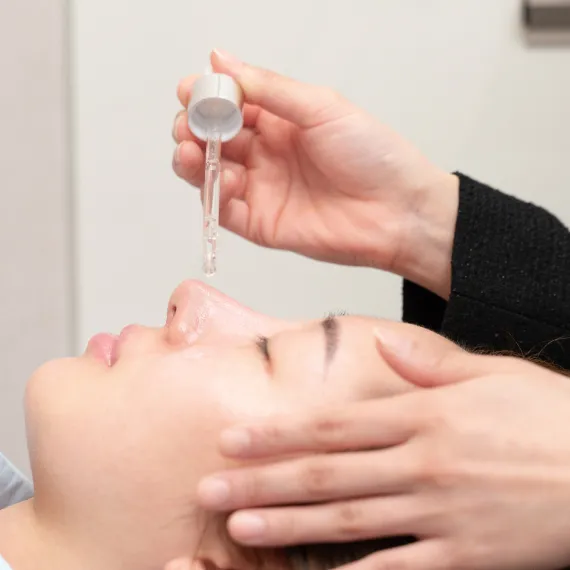
Local Anesthesia

Step 3
Thread Lifting Procedure
Step 4
Completion
Samsong Station Dermatology · Samsong-dong Dermatology, OWN Clinic
Thread Lifting Treatment Areas
Forehead, Eye Area/Eyes, Front Cheeks, Deep Cheeks, Nose Bridge, Nasal Tip, Nasolabial Folds, Double Chin/Jawline


Samsong Station Dermatology · Samsong-dong Dermatology, OWN Clinic
Precautions for Thread Lifting
- Bruising, swelling, pain, or foreign body sensation may occur but usually subsides within 1–2 weeks.
- Avoid turning your head sharply for about 4 weeks after the double chin procedure.
- The treated area may appear unnatural for about 3 weeks but will gradually look natural afterward.
- If you wear glasses, refrain from wearing them or sunglasses for about 2 weeks.
- Avoid alcohol, saunas, hot baths, and strenuous exercise for a week after the procedure.
- To reduce swelling, sleep in an upright position for 3 days and apply mild cold compresses to the treated area.
- You can cleanse your face half a day after the procedure. Remove the tape over the thread insertion site after half a day.
- Avoid actions that put pressure on the face, such as yawning or opening your mouth wide, until the thread settles into the fascia layer.
- If you experience increased pain, skin discoloration, itching, or fever after taking prescribed medication, contact the clinic immediately.
- In rare cases, the thread may come out of the treated area due to skin conditions. Do not touch it and visit the clinic.
- Take prescribed medication consistently for 3 days to prevent inflammation and reduce pain. Inform the clinic if you have a history of allergies to antibiotics.
FAQ
Since the thread is inserted near the cheekbone area and just in front of the hairline, the cheekbones do not enlarge after the procedure. If the thread enters inside the hairline, the deeper it goes, the wider the area above the cheekbones the thread passes, which may lead to the cheekbones overlapping tissues, making them seem larger after the procedure.
If the thread is inserted diagonally, sagging tissues are pulled outward and upward, making the face appear wider. Even if there’s no cheekbone enlargement or facial widening after thread lifting, a slimmer jawline may make the face appear shorter vertically, creating the illusion of a wider face as the horizontal width remains the same.
In cases where certain areas of the skin have thinned due to liposuction or excessive tension, dimples may appear along the thread path. Minor dimples due to swelling usually resolve naturally. However, if the dimples are severe or bothersome, visit the clinic within 2 weeks for correction. Note that unnecessary corrections may reduce the lifting effect, so follow the doctor’s advice.
Most threads used for thread lifting (PDO, PLLA, etc.) are sensitive to heat, so avoid high-frequency or ultrasound lifting procedures within 2 months after the procedure. Heat can accelerate the thread’s degradation. For effective lifting, perform high-frequency or ultrasound treatments before thread lifting.
Thread lifting uses dissolvable threads injected through needles to improve elasticity, while laser lifting uses lasers to target sagging skin. The two methods differ in mechanism, and the recommended approach depends on individual facial conditions or concerns.