


Aladin Peel
Regenerative peeling care that induces skin turnover with natural herb ingredients
An herb peeling program considering the skin regeneration cycle
What is Aladin Peel?
This is a procedure where finely ground natural freshwater sponge spicules are rubbed on the skin surface to induce the removal of dead skin cells. It helps clear clogged pores, shrink pores, and regulate sebum secretion, improving skin clarity and smoothness.


Aladin peeling step-by-step cleanses dead skin cells, skin texture, and tone
Features of Aladin Peel Procedure
-
Removes dead skin cells, stimulating the metabolism of live skin cells under the epidermis.
-
Not only removes skin cells but also deeply penetrates nutrients into the skin to strengthen skin tissue.
-
Aladin peeling with natural mineral ingredients is adjustable for sensitive skin.
Regenerative peeling care aimed at restoring skin condition
Principle of Aladin Peel Procedure
Finely ground freshwater sponge spicules are rubbed on the skin surface to remove dead skin cells, expel sebum from the pores, and shrink the pores. Additionally, trace minerals, calcium, and plant proteins in Aladin Peel help wound healing and cell regeneration.


Aladin Peel
Recommended For

-
For those concerned about large pores
-
For those who want to improve dull skin
-
For those concerned about acne or acne scars
-
For those who want to effectively regenerate skin cells
-
For those who want to improve keratosis pilaris (chicken skin)
Aladin Peel
Treatment Duration

Duration
20 minutes

Frequency
Every 2-3 months

Recovery Time
5-6 days
Aladin Peel
Procedure Steps

Step 1
Consultation

Step 2
Cleansing

Step 3
Aladin Peel Procedure
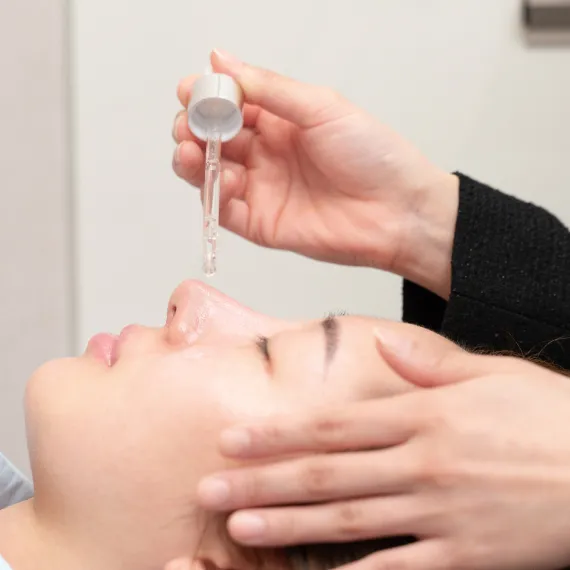
Step 4
Final Soothing Care
Aladin Peel
Treatment Areas
Full face, back, chest, arms, legs

Aladin Peel
Precautions
- You may experience redness, heat sensation, and tingling for 1-2 days after the procedure.
- Avoid strenuous exercise, alcohol, and smoking for a week after the procedure.
- Since herbal particles remain on the face, avoid touching your face and then rubbing your eyes.
- It is recommended to thoroughly apply a regenerating cream to the treated area for recovery.
- Do not forcibly remove peeling skin as it may cause scars or wounds.
FAQ
There are various types of acne, broadly divided into comedonal acne and inflammatory acne. Comedonal acne involves sebum accumulation within the skin, and treatment focuses on sebum and pores. Peeling treatments like Aladin Peel remove dead skin, cleanse the skin surface, and care for pores and sebum, making it suitable for comedonal acne while aiding in hydration and regeneration. For inflammatory acne, skin regeneration laser treatments are often used. Combining Neobeam lasers that weaken sebaceous glands with photodynamic (PDT) therapy reduces acne severity and sebum production.
After one session, results are visible. However, undergoing 2-3 additional sessions maximizes the effect.
Sensitive skin individuals may experience pain and stinging during peeling procedures.
Dead skin peels off naturally within 3-5 days after the procedure. Do not forcibly remove it as it may cause wounds or scars.